The Enigmatic World of Mahjong: Cultural Legacy and Modern Adaptations
Mahjong, a game rich in history and cultural significance, has fascinated players across the globe for centuries. Originating in China, it has evolved into various forms while retaining its core identity. This article delves deep into the intricate world of Mahjong, exploring its cultural legacy, the variations it has spawned, and its adaptation into the digital age, notably through platforms like 836bra.com Oficial Slots Brasil #1.
The Origins of Mahjong
The origins of Mahjong are shrouded in a blend of myth and documented history. Believed to have been developed in the mid-19th century during the Qing dynasty, Mahjong is said to have been designed to be played by the elite of Chinese society. However, as time progressed, it transcended social boundaries and became a popular leisure activity across China.
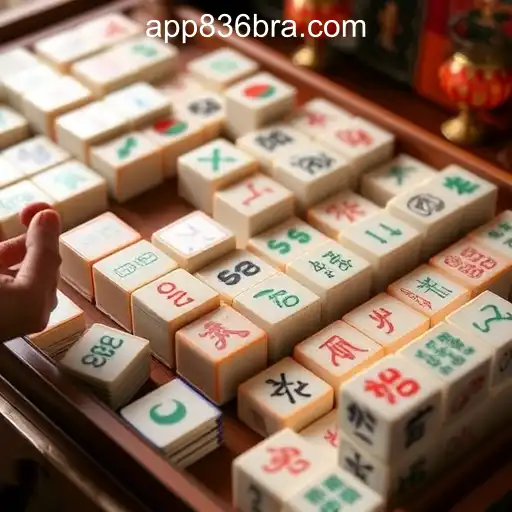
Mahjong is typically played with a set of 144 tiles based on Chinese symbols and characters. The objective is to construct a winning hand, similar to the card game rummy. The cultural significance of Mahjong is deep-rooted; it often serves as a conduit for social interaction and is a staple in Chinese family gatherings and community events.
The Cultural Significance
Mahjong is more than just a game; it is a cultural phenomenon. It plays a vital role in rites of passage, celebrations, and familial bonding. For many Chinese, playing Mahjong is not only a pastime but also a cultural practice that reinforces family ties and community relationships.
The game's rich heritage has also made it a subject of artistic representation in various forms, including literature and films, where it is often used as a symbol of wisdom, strategy, and luck. Mahjong’s cultural impact extends beyond China’s borders, with communities around the world adopting and adapting it into their cultures.
Global Variations
As Mahjong proliferated worldwide, different regions adopted the game, leading to the emergence of distinct variations. While Chinese Mahjong remains the mother of all versions, countries like Japan, Korea, and the United States have developed their bespoke sets of rules and playing styles. Each variation brings a unique twist to the game while preserving the essence of the original.
Japanese Mahjong, commonly known as Riichi Mahjong, is one of the most popular variations. It introduces additional rules and a scoring system that make for a more strategic and competitive game. In contrast, American Mahjong often employs a unique set of cards to guide scoring and gameplay, reflecting American social tastes and demographics.
Digital Transformation and Mahjong
With technological advancements, Mahjong has also found its way into the digital realm. Online platforms have provided a new avenue for enthusiasts to enjoy the game globally, breaking geographical limitations. Digital versions of Mahjong have become popular on both smartphones and computers, offering single-player, multiplayer, and tournament modes.
One notable platform is 836bra.com Oficial Slots Brasil #1, which includes Mahjong-themed games among its diverse offerings. Such platforms have leveraged the appeal of Mahjong by integrating it into slot games, attracting both traditional Mahjong players and new audiences. The digital transformation has enabled Mahjong to maintain its relevance in an ever-changing gaming landscape.
Conclusion: Mahjong's Timeless Appeal
In conclusion, the enduring appeal of Mahjong is a testament to its versatility and cultural significance. From its humble beginnings in China to its adaptation into global variations and digital formats, Mahjong continues to captivate players around the world. Platforms like 836bra.com Oficial Slots Brasil #1 play a significant role in the digital age of Mahjong, ensuring that the game remains a beloved pastime for generations to come.